
I have a simple question for you: who manages who?
Do you manage your calendar…
or does everyone else manage it for you?

It’s a confronting thought. Because if we’re honest, many of us feel like our calendar is running us — not the other way around.
In this video, I want to share one simple tip that can have a big impact on how you manage your time and your calendar.
Right now, I’m in Athens with TK, visiting the Acropolis — this breathtaking, historic monument overlooking the city.
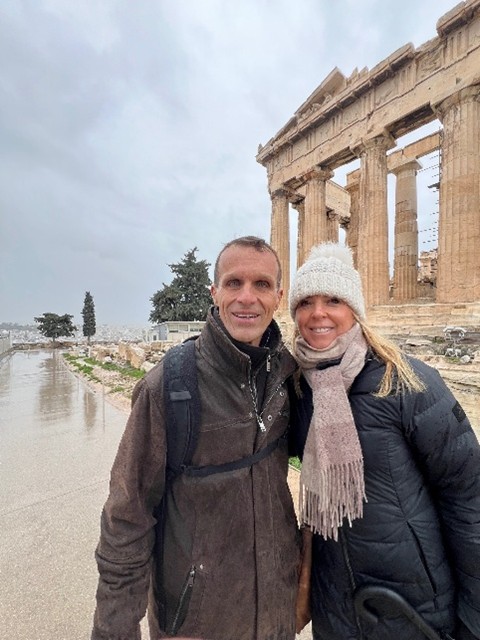
The weather isn’t ideal. It’s raining, and this was the only day we had to visit. But even under grey skies, the place is extraordinary. We’ve just spent nearly two hours with a passionate guide explaining the history of the site. Absolutely fascinating.
I’m in Athens because I’ve been working over the past few days with a large Greek company. And during one of our sessions, we did an powerful exercise. First, I asked the leaders a simple question: What are your big rocks? What are the priorities that truly matter?
They identified them clearly. But when I asked them to connect those priorities to their calendars, that’s when the tension appeared. They opened their calendars and said, almost in unison: “There’s no time.”
One leader showed me his schedule. It was packed.
- Meeting after meeting.
- Some he didn’t need to attend.
- Some he could delegate.
- One was a three-hour meeting he knew he should only attend for thirty minutes.
Yet there it all was — filling his week. He wasn’t managing his time. His time was managing him.
So we introduced an exercise I call the Ideal Week.

The idea is simple: intentionally design a version of your week that protects what matters most. There are three elements I always suggest including:
1. Protect personal priorities
Block time for your health, family, and passions. Put it in your calendar as non-negotiable appointments.
2. Protect time for your big rocks
Especially thinking time. Meetings with others easily fill a schedule — meetings with yourself rarely do unless you protect them.
3. Protect time for triage
You need dedicated time to process emails, messages, and small tasks. If you don’t plan for it, it spills into everything else.
When people design their ideal week, they often discover that around 40% of their time needs protection. And that’s perfectly okay. You’re still leaving space for collaboration and meetings — but you’re choosing not to give away all your time.
Your real week will never look exactly like your ideal week. But even moving in that direction creates a dramatic shift. On average, people gain around an extra hour to an hour and a half per day focused on what truly matters. Not just professionally — but personally as well.
Performance improves.
Work–life balance improves.
Energy improves.
Everyone wins.
So here’s my question for you: Who is managing your time right now?
This is this week’s Work Smarter, Live Better tip. Hope you have a lovely and beautiful day!
A bientôt,
Cyril