
A few years ago, Qantas finally got the technology to connect people to the internet mid-flight. The CEO at the time was instantly bombarded with messages from frequent flyers begging him: “Please keep it the way it is. The sky is the last place where we can completely disconnect.”

Today, that’s no longer possible. Most flights have onboard Wi-Fi now. But it was a fascinating look at how desperate busy leaders and working professionals are for a bit of enforced quiet time.
In this video, I want to talk about the importance of true disconnection. As I write this, TK, Cameron, and I are on a tiny, remote island in Fiji. When I say remote, I mean it. We had to take two flights and a long boat trip to end up in this little paradise.

The local village here has a unique relationship with technology. To get internet, they put a single mobile phone inside a plastic cover on top of a pole to protect it from the rain. That phone catches a signal from the mainland and creates a hotspot for the village. Every evening, locals gather around a small hut for about an hour to connect, chat with loved ones, and then disconnect again.

I brought a slightly more modern setup. Out on the grass, I have my Starlink satellite dish running off a petrol generator so we can get a proper signal.
But being here has made me realise how completely we have lost the ability to be disconnected in our modern lives. At work, people are reachable 24/7. Even at home, we are constantly checking our screens. A study a few years ago suggested we are interrupted by a device every three minutes—and I’d bet it’s even more frequent now.
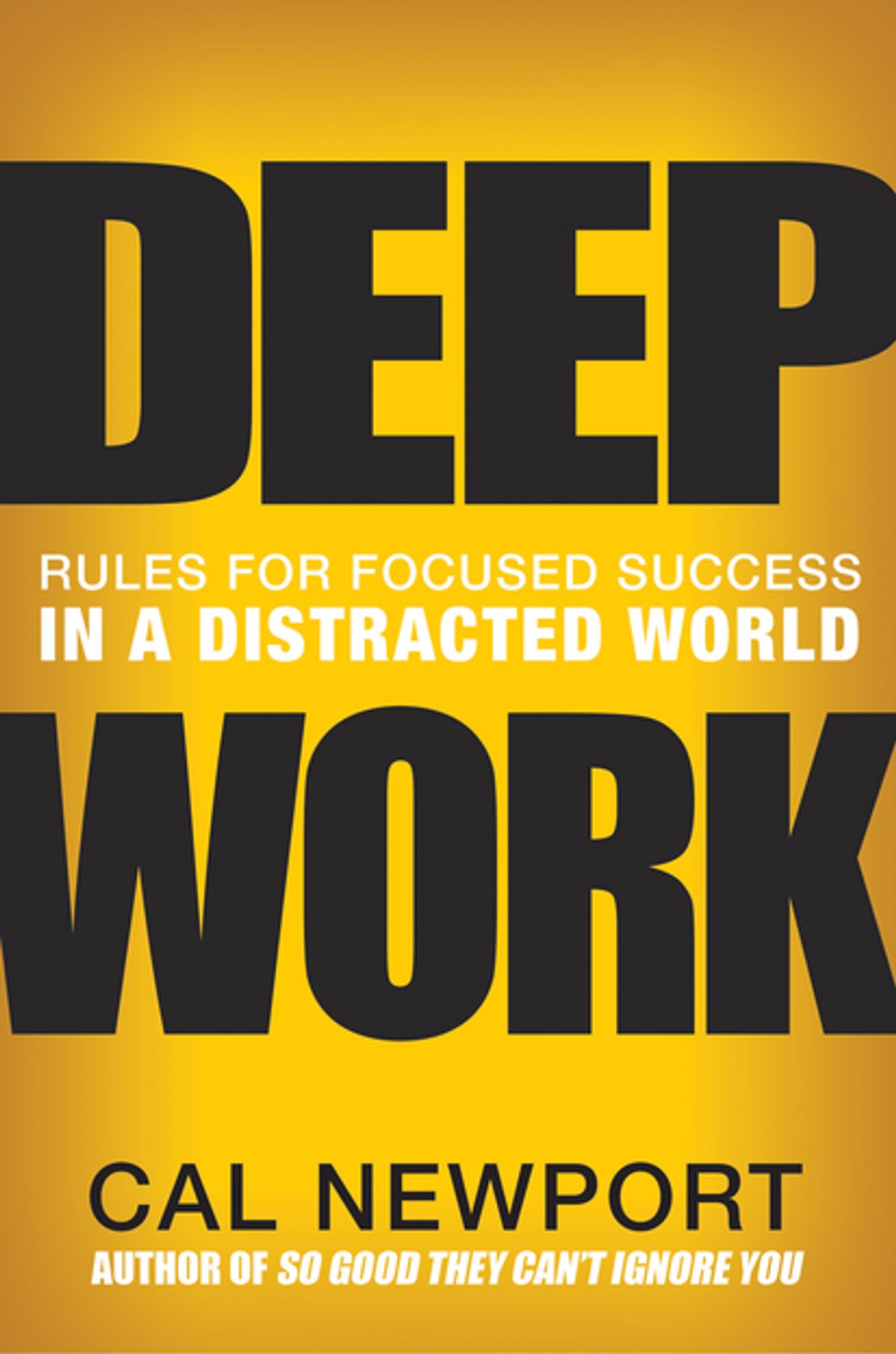
In his brilliant book Deep Work, Cal Newport explains that by constantly giving in to these pings, we are training the “muscle of distraction.” We are losing our capacity for deep, sustained focus.
I am far from perfect. Look at me—I’m on vacation in paradise and I still brought a Starlink dish! But what I’ve forced myself to do here is limit our connection to just one hour per day. The rest of the time is for living. Yesterday, TK spent the whole day teaching the kids at the local village school, where there is hardly any electricity. It has been incredibly refreshing.
Back in the workplace, I use three distinct tactics to protect my mind from constant connection:
1. Alternating blocks. I strictly alternate between dedicated “connection time” to check emails and blocks of time where I completely shut everything down.
2. Daily deep focus. I protect at least an hour and a half—ideally three hours—every single day for deep, uninterrupted focus. No notifications allowed.
3. No-connection zones. I enforce a strict digital boundary from 8:00 PM to 8:00 AM. I also try to do one full day a month completely off the grid, though I admit that one is a massive challenge.
Right now, I am literally about to turn off the generator and shut down the Starlink. The kids are waiting, and we brought a bouncy ball from Australia to play with them in the water. This afternoon, Cam and I are heading out for a snorkel and a spearfish before spending the evening with the locals.
So now, my question to you is: When was the last time you truly disconnected from your devices? How long were you able to hold out, and what is one boundary you can set this week to win back your focus?
You have a lovely day.
À bientôt.
Cyril